Elevating sound. Empowering musicians.
At lefreQue, we believe music reaches its full potential when sound can flow freely.
For more than 15 years, we have been developing high-end acoustic innovations that help musicians experience greater resonance, response, intonation, projection and tonal richness. What began with the internationally recognized lefreQue Sound Bridge for wind instruments has evolved into a broader family of sound enhancement products — all created with one clear purpose:
helping musicians express themselves more freely and more naturally through their instrument.

Today, lefreQue offers multiple product lines focused on sound enhancement across both wind and string instruments, including:
- the renowned Sound Bridges for woodwind and brass instruments
- the IntoniQue Sound Enhancer for wind and string instruments
- premium ligatures for saxophone and clarinet
- the Booster accessory for the IntoniQue system and the latest Free Reed Mark II ligature
Each product is developed from the same philosophy: improving the natural transfer of vibrations throughout the instrument to unlock richer resonance, improved response, and greater playing comfort.
Used by professional artists, conservatories, orchestras, teachers, and ambitious students around the world, lefreQue has become an internationally respected name in acoustic innovation for musicians.
More freedom. More resonance. More music.
Vision & Mission
We believe every musician should be able to experience the full acoustic potential of their instrument. Music is about expression, nuance, emotion, and connection — and technology should support that artistry in the most natural way possible.
Our mission is to develop innovative sound enhancers that improve resonance, intonation, response, and tonal balance across a wide range of instruments. By optimizing how vibrations travel through an instrument, lefreQue products help musicians play with greater ease, precision, confidence and freedom of emotional expression.
Innovation at lefreQue is always guided by real musical experience.
Every development begins with listening — to musicians, to instruments, and to the subtle relationship between player, resonance and sound.
For nearly 15 years, our goal has remained the same:
to help musicians transform more of their energy into pure musical expression.
Why lefreQue
Every instrument contains points where vibrations lose energy. Whether in the joints of a wind instrument, the mouthpiece setup of a saxophone, or the resonance behaviour of a string instrument, these interruptions influence tuning, projection, response and tonal balance.
lefreQue develops sound enhancers that help optimize the transfer of vibrations throughout the instrument-system. The result is a more direct connection between musician and instrument.
Players around the world experience:
- increased resonance and projection
- richer overtones and tonal depth
- improved intonation and stability
- faster response
- greater flexibility and articulation control
- enhanced playing comfort and efficiency
- a stronger connection with their instrument
What distinguishes lefreQue is the combination of acoustic innovation, elegant simplicity, and broad compatibility across multiple instrument families.
Over the years, lefreQue has built a strong international network of specialized dealers, distributors, and artist ambassadors. These partnerships remain essential to the company’s philosophy and international growth. Professional retailers provide musicians with expert guidance, demonstrations, and local support that are invaluable within the musical community.
At the same time, lefreQue continues to strengthen its direct relationship with musicians worldwide through its online platform, educational content, and direct product accessibility. In this way, the company combines global reach with personal expertise and strong local partnerships.
Great musical expression begins with freedom of resonance.
How lefreQue Sound Enhancement Works
The performance of any instrument depends on how efficiently vibrations can travel throughout the entire acoustic system. In practice however, we often lose energy at connection points, in materials, or areas where resonance becomes interrupted.
lefreQue sound enhancers are designed to support and optimize these vibration pathways. By improving the transfer of energy between components, the instrument can respond more freely and naturally.
Depending on the product and instrument type, musicians may experience:
- a more open and resonant sound
- improved projection and tonal focus
- greater stability in intonation
- quicker response
- enhanced flexibility across registers
- improved balance between resistance and airflow
- a tangibly stronger bond with your instrument
lefreQue products are available in different materials and finishes — including brass, silver, gold, and platinum — each offering its own tonal character and playing experience. This allows musicians to personalize their setup according to their instrument, repertoire, and artistic preference.
Rather than changing the identity of an instrument, lefreQue products are designed to reveal more of its natural acoustic potential.
The Team
lefreQue is built by musicians, for musicians. The company combines artistic experience, technical innovation, craftsmanship, and international collaboration within the professional music industry.
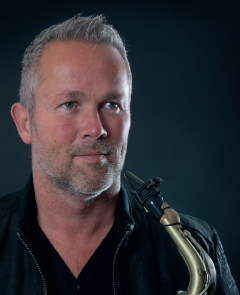
Hans Kuijt — Founder & Inventor
Professional flutist and saxophonist Hans Kuijt developed the first lefreQue Sound Bridge from a personal search for better intonation, greater resonance and playing freedom. His musical experience continues to shape the company’s innovation and philosophy.

Frank Leipoldt — Sales & Production
Frank Leipoldt oversees international sales, production, and distribution while maintaining close relationships with dealers, distributors, and partners worldwide.
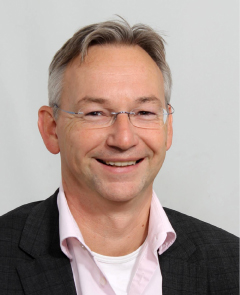
Bert-Jan Reekers — Finance & Operations
Bert-Jan Reekers supports the strategic and operational growth of lefreQue and helps strengthen the company’s position as an international premium brand for acoustic sound enhancement.
Together, the lefreQue team works daily to develop innovative sound enhancers that support musicians in achieving greater expression, control, and musical freedom — while continuing to value and support the global network of specialized dealers and distributors that help bring lefreQue to musicians everywhere.
The Inventor — Hans Kuijt
Behind lefreQue stands founder and inventor Hans Kuijt — a passionate professional musician with a rare combination of artistic sensitivity and technical insight.
Before graduating with honours from the conservatory as both a flutist and saxophonist, Hans first completed a degree in electronics. Throughout his career he worked as a music teacher, conductor, solo performer, and ensemble musician. For many years, he performed with his ensemble L’Imprévue, with whom he received the prestigious Lauwerkrans van het Koningklijk Concertgebouworkest Amsterdam award.
Hans’ search for better sound and intonation ultimately became the foundation of lefreQue.
While preparing a demanding contemporary classical work for alto saxophone and tuned percussion by American composer Russell Petersen, he became frustrated by persistent tuning issues that could not be solved through practice, alternate fingerings, or playing technique alone. The overall acceptation of the tuning of the altissimo register was not good enough.
This experience led to a deeper realization: there was a fundamental acoustic problem in the way instruments are constructed and how vibrations travel through materials and connections within the instrument.
Driven by curiosity and perfectionism, Hans began developing theories about vibration transfer, resonance loss, and acoustic efficiency. His ideas evolved into technical solutions. Scientific research helped to create the innovative sound enhancement products that form the foundation of lefreQue today.
Scientific research
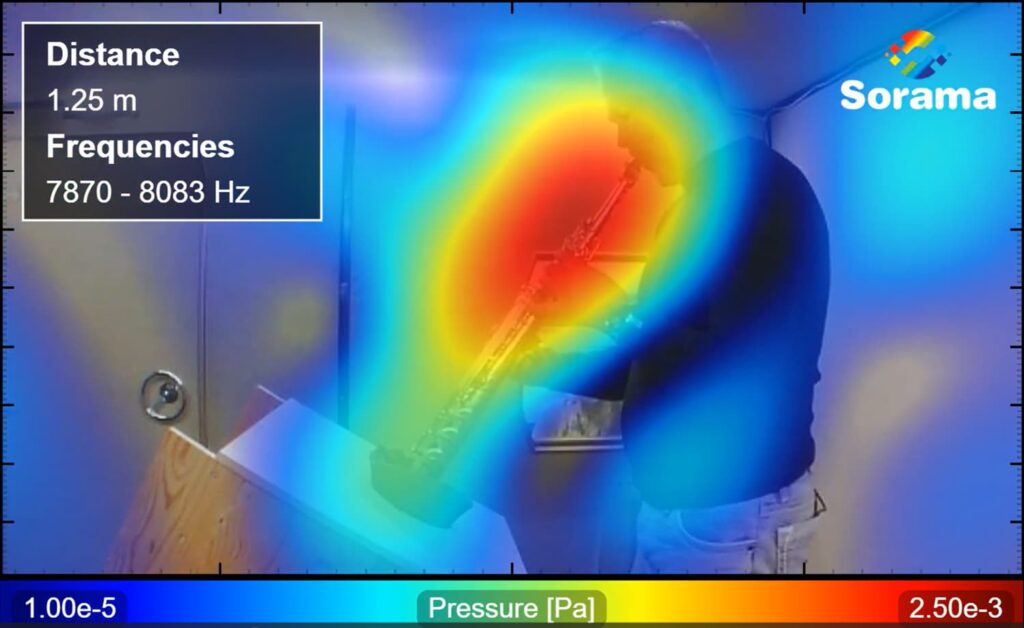
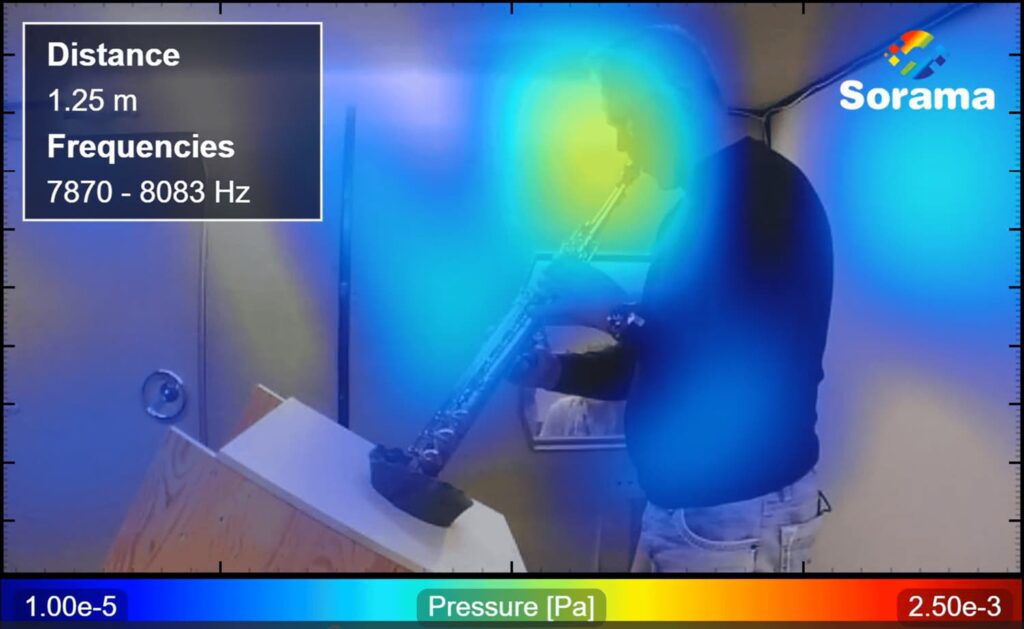
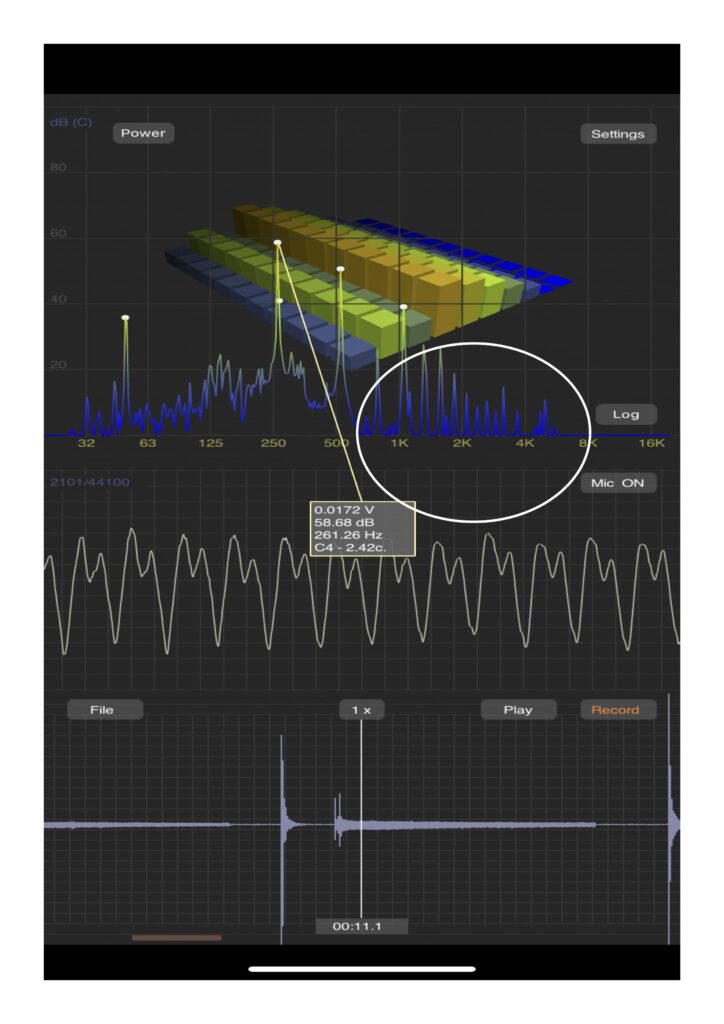
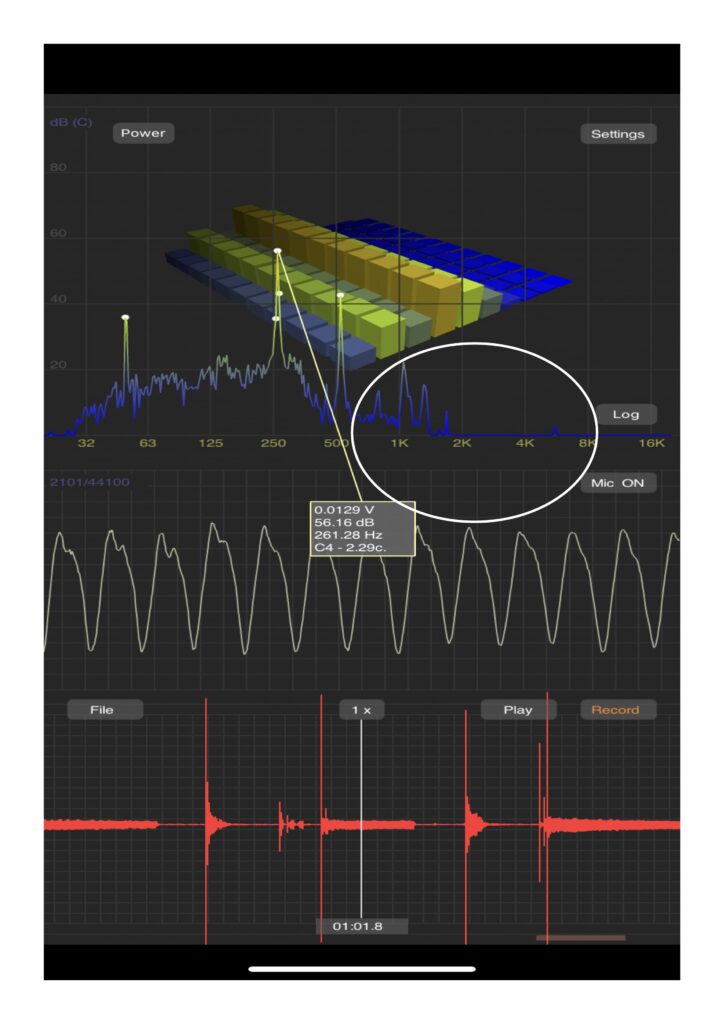
Through the years lefreQue conducted a lot of different studies and experiments among which literature studies, spectral analyses, blind tests and acoustical measurements in anechoic chambers. A brief impression of the results is shown below :